Can AI Generate Images from Text: A Step-by-Step Guide 2025
Imagine describing a scene in words and seeing it instantly transformed into a vivid image no artistic skills required. Today, the question “can ai generate images from text” is answered with astonishing advancements that have reshaped creativity. This article will guide you through the evolution of AI image generation, explain how text-to-image AI works, and provide a practical, step-by-step process for 2025.
You’ll discover real-world applications, current limitations, and the exciting future of AI-powered visuals. Ready to unlock a world where your ideas leap from text to art? Let’s explore how this technology is empowering creators everywhere.
Can AI Generate Images from Text?
Yes, AI can generate images from text. This is done using text-to-image models, which are trained on large datasets of images paired with descriptions.
When you provide a text prompt (for example, “a futuristic city at sunset in cyberpunk style”), the AI interprets the words, understands visual concepts like objects, colors, styles, and composition, and then generates a new image that matches the description.
Modern AI image generators can:
Create realistic or artistic images
Follow specific styles (photorealistic, illustration, oil painting, etc.)
Combine multiple concepts in a single image
Generate images that have never existed before
Common examples of this technology include models like DALL·E, Stable Diffusion, and Midjourney.
In short, AI can effectively turn written descriptions into visual content, making image creation faster and more accessible.
The Evolution of AI Image Generation
The journey to answer "can ai generate images from text" has unfolded at remarkable speed. Just a decade ago, the idea of instantly visualizing words seemed like science fiction. Today, AI-driven art is not only possible it’s redefining creativity for millions worldwide.
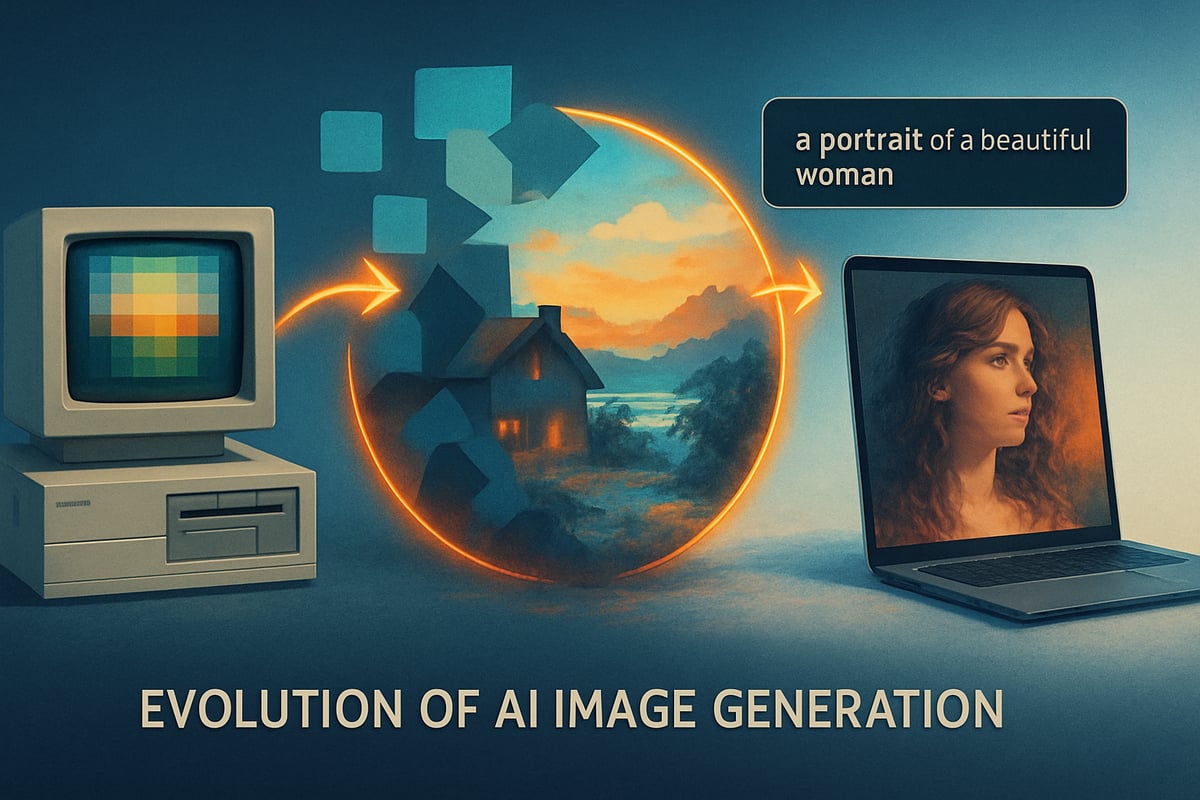
Early experiments in computer-generated imagery began with basic pattern recognition and image synthesis. These systems struggled with complexity and often produced abstract or distorted visuals. The field took a major leap when Generative Adversarial Networks (GANs) emerged in 2014. GANs introduced a competition between two neural networks, enabling machines to produce more realistic images from random noise or structured data.
Diffusion models soon followed, offering greater control and higher fidelity. These models gradually refine random patterns into detailed images, making them especially suited for interpreting text prompts. Transformer-based systems further advanced the process, allowing AI to better understand language subtleties and context. Each breakthrough brought us closer to fully realizing the potential of "can ai generate images from text" in practical applications.
Major milestones arrived with platforms like OpenAI’s DALL·E, Google’s Imagen, and Stability AI’s Stable Diffusion. These tools could translate even nuanced descriptions into vivid, coherent visuals. For example, a prompt such as “a futuristic city at sunset, painted in the style of Van Gogh” could yield a stunning, original image in seconds. By 2024, the answer to "can ai generate images from text" was clear: not only can AI do it, but it does so at scale and with increasing sophistication.
The numbers are staggering. According to AI image generation market growth, over one billion AI-generated images are created each month across major platforms. This explosive growth is fueled by open-source communities, which have accelerated innovation by sharing model architectures, datasets, and code. Their collaboration ensures rapid iteration and widespread adoption, making AI-powered art creation accessible to anyone with an internet connection.
The democratization of creative tools is one of the most profound shifts in digital culture. No longer limited to professional artists or designers, anyone can now use text-to-image AI to bring their ideas to life. This has sparked a wave of viral AI-generated artworks, from surreal memes to photorealistic portraits. These creations routinely trend on social media, inspiring new artistic movements and challenging traditional notions of authorship.
The impact is not just technical it’s cultural. As "can ai generate images from text" becomes an everyday reality, the boundaries between imagination and visual expression continue to blur. The evolution of AI image generation is setting the stage for a future where creativity is truly limitless.
How Text-to-Image AI Works
Text-to-image AI has rapidly evolved, making it possible for anyone to turn words into striking visuals. But how does this technology actually work behind the scenes? To answer the question, "can ai generate images from text," let’s break down the key technologies, leading platforms, and a real-world example with DaVinci AI.
Key Technologies Behind Text-to-Image Generation
At the heart of this innovation are two fields: natural language processing (NLP) and computer vision. NLP allows the AI to understand and analyze your written prompt, while computer vision guides the system in crafting visual outputs that match your description. When you ask, "can ai generate images from text," it's this powerful combination that makes it possible.
Modern models interpret prompts by breaking down sentence structure, identifying key objects, styles, and moods. For example, a prompt like "a futuristic city at sunset" is parsed for scene details, color themes, and artistic style. The AI then maps these concepts to visual elements.
Two principal model types drive this technology: Generative Adversarial Networks (GANs) and diffusion models. GANs work by pitting two neural networks against each other one generates images, the other critiques them. This competition refines the output. Diffusion models, on the other hand, start with random noise and iteratively add detail, producing highly realistic images with fewer artifacts.
Training data diversity is crucial. Leading models are trained on vast datasets billions of image-text pairs ensuring they can handle a wide range of subjects and styles. However, the question "can ai generate images from text" also hinges on prompt clarity. Ambiguous instructions can lead to unexpected results, as the AI must interpret your intent.
Style transfer and fine-tuning further expand creative control. Users can specify artistic genres, color palettes, or moods, and the AI adapts accordingly. Despite these advancements, challenges remain especially when prompts are too vague or contradictory.
Major AI Platforms and Tools in 2025
The text-to-image landscape in 2025 features several standout platforms. DALL·E 3, Midjourney v6, Stable Diffusion XL, and Google Imagen lead the field, each offering unique strengths. Users often ask, "can ai generate images from text that look photorealistic or artistic?" The answer depends on the platform chosen.
Platform | Photorealism | Art Styles | Customization | Speed | Accessibility |
|---|---|---|---|---|---|
DALL·E 3 | High | Multiple | Advanced | Fast | Web, Mobile |
Midjourney v6 | Medium | Creative, Bold | Moderate | Moderate | Web |
Stable Diffusion XL | High | Open-source | Extensive | Fast | Web, Custom |
Google Imagen | High | Limited | Basic | Fast | Web |
Commercial platforms offer polished interfaces, while open-source solutions provide deeper customization. Usage is booming, with over 30 million active users monthly on top platforms (Statista, 2024). Integration with mobile and web apps has made these tools widely accessible.
For example, the same prompt can yield dramatically different results: DALL·E 3 might produce a crisp, realistic scene, while Midjourney v6 could deliver a vibrant, stylized interpretation. User interfaces continue to improve, with built-in prompt suggestions and real-time previews. Niche platforms are also emerging, focusing on areas like logos, tattoos, or AI image generator platform for streamlined workflows.
DaVinci AI: Transforming Text Prompts into Art
DaVinci AI stands out as an all-in-one platform, answering the question, "can ai generate images from text for any user?" With DaVinci AI, users simply enter a prompt and select from curated styles, from watercolor to photorealism.
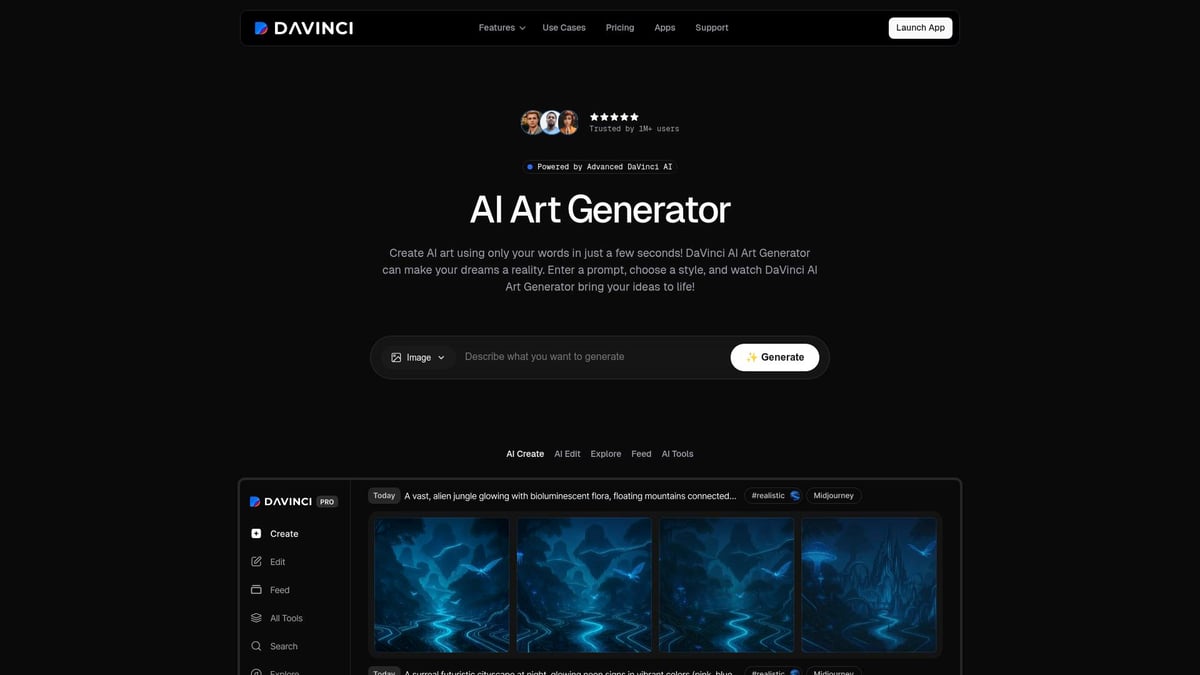
The platform’s editing tools enable quick refinements, and images are ready for instant download. Mobile accessibility and commercial usage rights make it a favorite for both personal and professional projects. Over 1 million users worldwide trust DaVinci AI to turn their ideas into high-quality visuals no design expertise needed.
Step-by-Step Guide: How to Generate Images from Text with AI in 2025
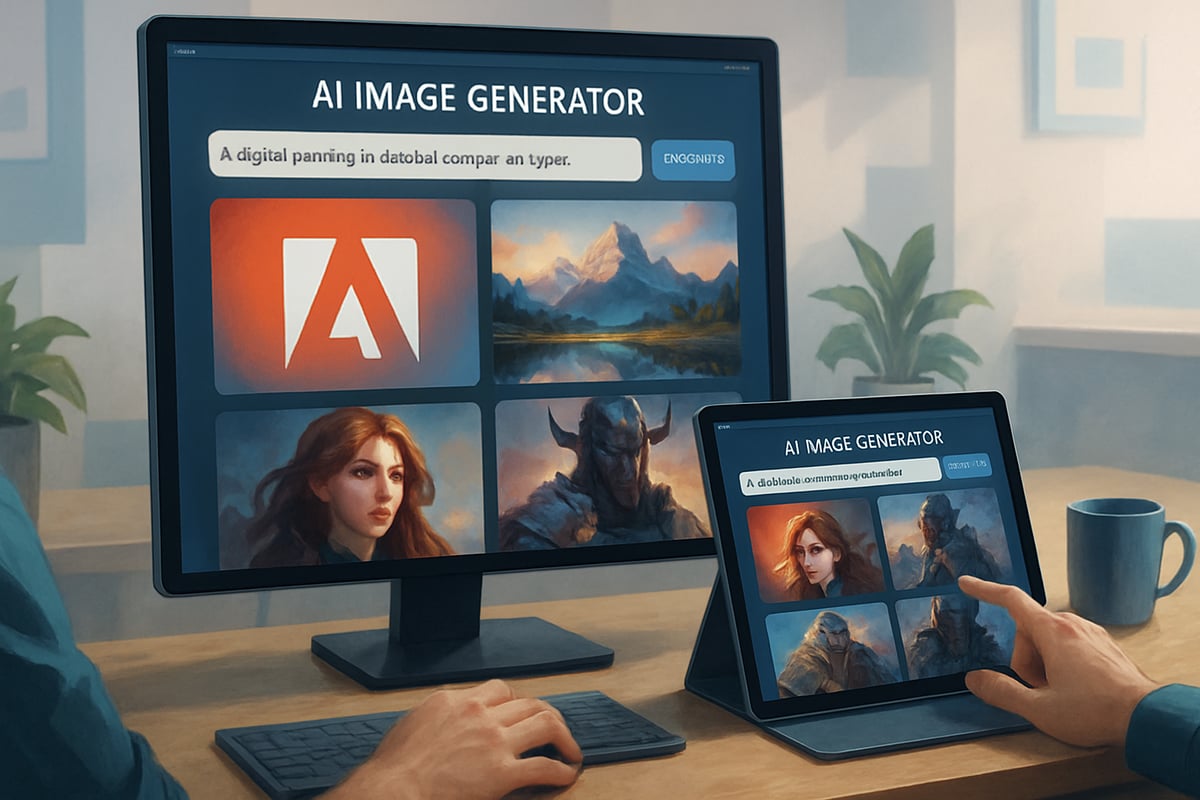
Imagine having a creative vision and watching it materialize as a digital image no technical expertise required. In 2025, the process is more accessible and powerful than ever. This guide walks you through each step, so you can see firsthand how can ai generate images from text and turn your ideas into visual reality.
Step 1: Choose the Right AI Image Generator
Start by identifying your project’s needs. Do you want photorealistic images, artistic illustrations, or something in between? Consider if your images are for personal use, commercial projects, or social media.
Compare leading platforms DALL·E 3, DaVinci AI, Midjourney, and Stable Diffusion. Each offers unique strengths:
Platform | Art Styles | Photorealism | Commercial Use | Device Support |
|---|---|---|---|---|
DALL·E 3 | Varied | High | Yes | Web, iOS |
DaVinci AI | Curated, custom | High | Yes | Web, iOS, Android |
Midjourney | Artistic focus | Moderate | Yes | Web (Discord-based) |
Stable Diffusion | Open-source | Customizable | Yes | Web, desktop |
Check device compatibility and pricing models. Free trials, subscriptions, and commercial rights differ across platforms. For example, DaVinci AI stands out for its versatility and mobile support, making it a strong choice if you want to see how can ai generate images from text on the go.
Step 2: Create or Log Into Your Account
Once you’ve selected a platform, create an account or log in. Most platforms ask for your email, but some also offer Google or Apple sign-in for convenience.
Take a moment to review privacy settings and security features. Leading generators provide dashboards where you can track your creations and access prompt libraries for inspiration.
Sign-up requirements may vary: some tools require phone verification, while others only need basic details. For instance, DaVinci AI offers a quick registration process with a free trial, letting you explore how can ai generate images from text before committing.
Step 3: Craft an Effective Text Prompt
The quality of your results hinges on your prompt. Clear, specific prompts help the AI understand your vision. Think about subject, style, mood, and details.
Prompt engineering tips:
Be specific: “A serene mountain lake at sunrise, watercolor style.”
Add style cues: “digital painting,” “cartoon,” “photorealistic.”
Use mood descriptors: “mysterious,” “vibrant,” “calm.”
Keep prompts concise but detailed.
Avoid common mistakes like vagueness or conflicting instructions. Well-crafted prompts increase satisfaction with the results by 40%, according to user surveys. If you’re unsure, explore prompt libraries or community galleries to see how can ai generate images from text with different inputs.
Step 4: Select Style, Model, and Output Settings
Now, fine-tune your image. Select from various art styles, aspect ratios, and model versions offered by the platform.
Customize resolution, color palette, and themes to match your needs. Switch between photorealistic, cartoon, or abstract styles with a single click.
Advanced users can adjust settings for professional output, such as high-resolution exports or transparent backgrounds. Preview features provide instant feedback, so you can see how can ai generate images from text in real time and make adjustments before finalizing.
Step 5: Generate, Refine, and Download Your Image
Click generate and let the AI do its magic. Processing times are typically fast, delivering previews within seconds. Review the initial output many users refine their images at least once before downloading.
Refinement options include re-rolling (regenerating), tweaking prompts, or using built-in editing tools. Edit elements, erase unwanted parts, or create multiple variants. For example, if you’re designing a logo, you can iterate until the result aligns with your brand vision. Explore platforms like the AI logo creation tool to see how can ai generate images from text for professional branding.
Download your final image in your preferred format (JPG, PNG, etc.). Check commercial usage rights and licensing if you plan to use the image for business purposes.
Step 6: Use and Share Your AI-Generated Images
Your image is ready now put it to work. Share creations on social media, add them to presentations, or integrate them into marketing campaigns.
Many platforms offer direct sharing options and creative history features for easy access to past projects. For collaboration, export images to design tools or cloud storage.
Remember best practices for attribution and copyright compliance. When you showcase how can ai generate images from text on Instagram or other networks, use relevant hashtags and credit the platform if required.
Real-World Use Cases and Applications
AI-generated images created from text prompts are transforming creative workflows and opening new possibilities across industries. When considering the question, can ai generate images from text, the answer becomes clear as we explore how these tools are being applied in real-world scenarios.
Creative Industries and Content Creation
The creative sector has rapidly embraced the power of AI to generate images from text. Graphic designers, illustrators, and marketers now use these tools to streamline workflows and boost creativity. For example, an ad agency might input a detailed campaign brief, asking, "can ai generate images from text that match our brand's modern aesthetic?" The AI delivers multiple custom visuals, enabling rapid prototyping and faster feedback cycles.
A recent Adobe survey found that 70% of creative professionals use AI tools for image generation at least once a week. This shift provides several advantages:
Speed: Concepts can be visualized in seconds.
Cost savings: Reduces reliance on traditional stock imagery.
Creative inspiration: Offers fresh perspectives and new styles.
Consider book covers or social media graphics. Teams can brainstorm ideas and instantly see them visualized, answering the once hypothetical question, can ai generate images from text, with practical, high-quality results.
Business, Branding, and Marketing
Businesses are leveraging AI-generated images for branding, product visuals, and marketing campaigns. Startups and established brands alike ask, can ai generate images from text that reflect their unique identity? The answer is yes, as AI-powered platforms produce logos, banners, and even personalized ad creatives tailored to specific audiences.
A case study from 2024 highlights a startup that launched with an AI-designed logo, saving weeks in design time and thousands in costs. According to Forbes, 30% of new businesses last year utilized AI for branding purposes. Integration with e-commerce platforms and email marketing tools allows companies to quickly generate custom visuals for every campaign.
The ability to iterate and customize designs ensures that brands stay agile. When evaluating creative needs, many organizations are discovering that not only can ai generate images from text, but it can also drive measurable results.
Personal, Educational, and Social Media Uses
On a personal level, individuals are exploring whether can ai generate images from text for hobbies and gifts. Teachers use AI-generated visuals to bring lesson plans to life, making abstract concepts more accessible for students. AI art has also become a viral trend across social media, with millions of users sharing avatars, memes, and creative projects every month.
For example, a teacher might ask an AI to visualize a historical event or scientific process, instantly engaging students with compelling imagery. Social platforms have seen over 50 million AI-generated images shared monthly, demonstrating the widespread appeal and versatility of these tools.
Specialized Applications: Tattoos, Interior Design, and More
Niche industries are finding unique value in text-to-image AI. Tattoo artists collaborate with clients using AI prototypes, allowing them to answer the question, can ai generate images from text for custom tattoo designs? The process enhances visualization and client engagement, with 1 in 5 tattoo enthusiasts trying AI design tools in 2024.
Homeowners and interior designers use AI to preview room makeovers, experimenting with colors and layouts before committing. For those interested in personalized tattoo art, platforms like the AI tattoo design generator make it easy to turn text prompts into one-of-a-kind designs.
These specialized applications demonstrate that the ability to generate images from text is not only possible but is reshaping how people approach creative and professional challenges.
Human Creativity and Platform Responsibility
Can ai generate images from text that rival human artistry? While AI tools democratize access to visual creation, they cannot fully replace the intuition, context, and originality of human artists. The debate continues over what constitutes true authorship when AI is in the creative loop.
Major platforms are responding by introducing content filters, ethical guidelines, and transparency measures. These efforts aim to balance innovation with responsibility, ensuring that AI-generated images are used fairly and inclusively.
Transparency, user education, and clear attribution are becoming industry standards. Ongoing improvements in model design and data curation are focused on reducing bias and supporting ethical use. As the technology matures, the question remains: can ai generate images from text in a way that is both powerful and principled? The answer depends on a shared commitment to responsible innovation.